

 Pay Online
 Client Access


Intuit has released its Fall 2026 update to Intuit Enterprise Suite, and it is one of the more meaningful releases for growing businesses we have seen. The headline is inventory. Inventory management now runs natively inside the platform, which means many companies no longer need a separate tool and a monthly reconciliation to keep their stock and their books in agreement.
The release also introduces a construction-specific solution, expands multi-currency controls, and adds a long list of smaller updates that make day-to-day accounting work easier. Here is what changed and who should pay attention.
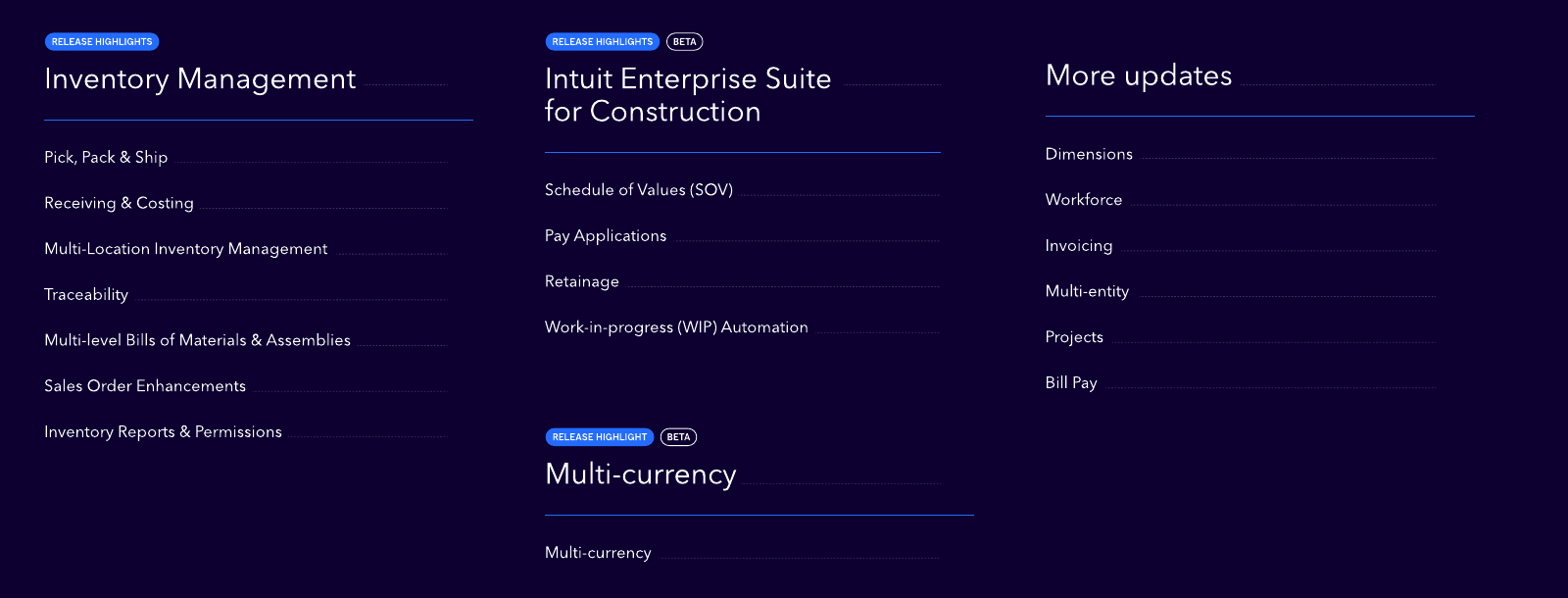
Inventory Management Is Now Built In
For businesses that hold stock, this is the biggest change in the release, and it is generally available now. Inventory is tracked from the moment goods are received to the moment they ship, with every unit costed and connected directly to the financials.
Pick, pack, and ship
A new fulfillment workflow connects sales orders directly to the warehouse floor. Managers can see every open order, assign pickers and packers, and track status in real time. Warehouse staff get a mobile view for their assigned orders, and shipping labels can be purchased and printed without leaving the workflow, with tracking flowing back onto the order.
Receiving and landed cost
Item receipts can now include freight and non-inventory items alongside stock, so a shipment can be received in full on one receipt. Landed cost folds freight, customs, and handling charges into what an item actually cost, which keeps margins from being overstated. A new value adjustment also lets you correct the dollar value of on-hand inventory and recalculates average cost automatically.
Multiple locations
Inventory can be tracked by location and, optionally, by sub-location within it. That includes transfers between locations, reorder points set per location, and location-aware reporting.
Traceability and barcodes
Lot and serial number tracking can now be required company wide on relevant transactions. Barcode scanning works with standard USB or Bluetooth scanners across receipts, bills, orders, counts, adjustments, and picking, and you can print barcode labels without third-party software.
Bills of materials and assemblies
Manufacturers can define multi-level bills of materials, run production orders, see shortages across sub-assemblies, and capture the materials and labor actually used. The inventory and cost entries post automatically when production is completed.
Sales orders, reporting, and permissions
Sales orders now accept customer deposits, which carry through to the invoice, and support multiple ship-to addresses. New Inventory Aging Summary and Detail reports show how long stock has been sitting and how much capital is tied up in it. A rebuilt Inventory Operations Manager role lets you give inventory staff exactly the access they need without opening up financial data they do not.
Intuit Enterprise Suite for Construction
Construction companies get a purpose-built solution for the first time. It is in beta and is offered as a separate add-on, so the details of access are worth confirming before planning around it. It covers four workflows contractors have long handled outside their accounting system:
- Schedule of Values. Build a contract’s scheduled work items directly on the project, bill progressively against them, and flow approved change orders into the contract, with each billing period preserved as its own record.
- Pay Applications. Create pay apps from project billing progress, bringing invoices, G702/G703-style documentation, lien waivers, and certificates of insurance into a single package for the client.
- Retainage. Set retainage at the company, project, vendor, or purchase order level, release it in full or in stages, and see what is withheld and outstanding in project views and aging reports.
- WIP automation. An AI agent helps with month-end work-in-progress reporting by collecting updated costs from project managers, recalculating the WIP schedule, and drafting over and under billing entries for review. Nothing posts until you approve it, and projects whose margins have slipped past a set threshold are flagged.
For contractors who build schedules of values in spreadsheets and chase project managers every month to close WIP, these tools could remove a lot of manual work. For a look at how we have helped a company in a related field, see our aggregate industry case study.
Multi-currency Gets Tighter Controls
Multi-currency, introduced earlier this year, gains the controls finance teams have been asking for. It remains in beta and is currently available to a limited set of customers.
Admins can now control who can view, create, or edit exchange rates. Businesses can pay down foreign-currency credit cards, transfer funds into foreign bank accounts, and record fixed assets in the currency they were purchased in, with foreign exchange gains and losses calculated automatically. Intercompany transactions between entities with different functional currencies are handled correctly, and more standard reports now show which figures have been remeasured.
Other Updates Worth Knowing
The release also includes a range of smaller improvements, some generally available and some in beta:
- Dimensions. Dimension assignments on sales orders now carry over to invoices, defaults can be assigned in bulk by spreadsheet upload, prior transactions can be reclassified, and multi-dimensional pivots on detail reports are now generally available.
- Consolidated bills. A single view of paid and unpaid bills across every entity, filterable by company or intercompany versus external.
- Sub-projects. Parent projects can hold nested sub-projects, each with its own invoices, budgets, and reports that roll up to the parent.
- Vendor credits. Available credits now appear directly in Pay Bills, and the net payment recalculates as you apply them.
- Invoicing. Multiple shipping addresses on invoices, grouped expenses, and new purchase order reports.
- Workforce. New beta options include an Intuit expert who runs payroll on your behalf, service item tagging in payroll so labor costs land against the right work, compliance training, and team surveys.
Moving Off QuickBooks Desktop
This release lands at a time when many businesses are already rethinking their accounting platform. Intuit has been steadily ending support for older versions of QuickBooks Desktop, including recent Desktop and Enterprise releases, and is pointing those users toward its cloud products. Once a version is discontinued, it no longer receives security updates or access to connected services like online banking and payroll.
For companies that relied on QuickBooks Enterprise Desktop for inventory and manufacturing, the gap in the cloud has long been the sticking point. This release goes a long way toward closing it. Native inventory, multi-level bills of materials, lot and serial tracking, and barcode scanning mean Intuit Enterprise Suite can now handle much of what those businesses needed Desktop to do. One manufacturer featured in Intuit’s release notes said the new build system works even better than the Advanced Inventory feature they used in Enterprise Desktop.
If you are still on Desktop, it is worth planning your move before your version reaches end of support rather than after. A migration is also a good opportunity to clean up your chart of accounts, item lists, and reporting structure instead of carrying old problems into a new system.
What This Means for Your Business
Many of these features are rolling out in beta between now and early next year, and they will be labeled as generally available once they graduate. If you want to use them sooner, Intuit offers an Early Access Program.
Before switching on new capabilities, it is worth thinking through how they fit your current setup. Migrating from Desktop, moving inventory into your accounting platform, adopting retainage tracking, or turning on multi-currency all affect how your books are structured and how your team works. A little planning up front avoids cleanup later.
If you are running on QuickBooks or Intuit Enterprise Suite and want to know whether these updates make sense for your business, we can help you sort through it. Learn more about our QuickBooks solutions or contact cHb Advisors to start the conversation.
