

 Pay Online
 Client Access


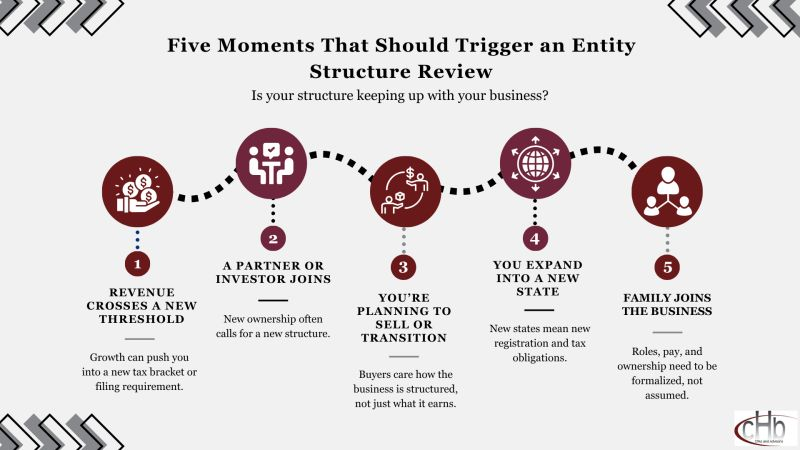
Most business owners pick an entity structure once, usually in the first year, and never think about it again. That makes sense when you are just getting started. It stops making sense once the business looks nothing like it did when you formed it. An entity structure that was right at formation can quietly cost you in taxes, liability exposure, or flexibility as the business grows. Here are five moments that should put a structure review on your calendar.
1. Revenue Crosses a New Threshold
Growth is good news, but it can push you into a new tax bracket or a new filing requirement without you noticing until the return is due. This is often the point where an S corp election starts to make sense for an LLC that has outgrown its original setup, since the payroll tax savings can become meaningful once profit reaches a certain level. The IRS’s overview of business structures is a useful starting reference, but the right threshold depends on your specific numbers.
2. A Partner or Investor Joins
Bringing on a partner or outside investor changes who owns what and who is exposed to what. A structure built for a single owner rarely fits multiple owners cleanly, and getting ownership percentages, voting rights, and profit splits wrong at the start creates problems later that are far more expensive to unwind.
3. You’re Planning to Sell or Transition
Buyers care how a business is structured, not just what it earns. The wrong entity type can complicate a sale, trigger avoidable tax consequences, or slow down due diligence. If a sale or ownership transition is even a few years out, this is worth reviewing well before a buyer’s advisors start asking questions.
4. You Expand Into a New State
Doing business in a new state usually means new registration requirements and new state tax obligations, and those obligations do not always align neatly with your current entity type. What worked when you operated in one state can create compliance gaps once you cross state lines.
5. Family Joins the Business
When a spouse, child, or other family member takes on a role in the business, roles, pay, and ownership need to be formalized rather than assumed. This is especially true if family involvement is part of a longer-term succession plan, where an outdated structure can make an eventual transition more complicated than it needs to be.
The Bottom Line
None of these moments automatically means you need to restructure. They mean it is time to check. An entity structure review is a conversation, not a project, and it is far easier to have that conversation on your own timeline than to have it forced on you by a tax bill, a buyer, or a new state’s registration office. If you recognize your business in any of the five moments above, our strategic business advisory team can walk through what your structure is doing for you today and whether it still fits, or our tax planning team can schedule a review. For a closer look at one common structure decision, see our post on LLC vs. S corp.
